It has been a long time coming, but American public sponsors finally have official guidance on completing Value-for-Money (VfM) analysis. VfM as a concept long predates the Infrastructure Investment and Jobs Act (IIJA) in federal law, but the IIJA made significant changes, culminating in last month’s final VfM guidance from the Build America Bureau (BAB). As we note in some detail in this edition, in the future many U.S. transportation P3s will need to complete and publish a VfM, including a quantitative risk forecast, before commercial close.
The IIJA makes several important changes to the use of VfM in the United States. The most important set of changes were in Section 70701, which theoretically does require VfM for even non-P3 projects, provided they (1) have costs greater than $750mm, (2) are in a state with P3 enabling legislation, (3) are seeking TIFIA or RRIF credit support, and (4) generate significant revenues from user fees or otherwise.
However, between the IIJA statutory requirements and the Bureau’s VfM guidance, that extension of VfM beyond P3s was largely lost. The end result is that P3s seeking federal credit assistance will likely need to complete and publish a detailed, quantitative VfM study prior to commercial close, while non-P3 megaprojects will not.
VfM is widely accepted as a way to select between traditional procurement and a public-private partnership, but it remains and will always remain an amorphous concept open to wide methodological debate. At a high level, a quantitative VfM analysis is a forecast comparing a P3 proposal with a hypothetical “Public Sector Comparator” (PSC), which is a forecast of the same project delivered using traditional procurement. In theory, the higher cost of financing in a P3 can be compared with the reduction in retained risks by the government, because some project risks are transferred to the private partner in a P3. The end result of a complex and at least half-hypothetical modeling exercise is a nice, clean number: the Value-for-Money of delivering the project as a P3 (or not).
However, that rigorous quantitative forecast is not completed for many U.S. P3s today, nor for any non-P3 projects. Many recent P3s have completed a more qualitative VfM analysis, which simply assesses the feasibility of delivering the project using either public financing or a P3 against the constraints and goals of the public sponsor. The public sponsors of several recent transportation P3s did not complete a rigorous quantitative VfM analysis simply because they did not need to do so in order to make a decision. In some cases, sponsors concluded that a publicly financed alternative to the project was not financially feasible, or that limitations on public funding for capital expenditures would have significantly extended the project schedule.
That won’t be the case going forward. Many P3s seeking federal credit assistance will need to complete and publish a rigorous, quantitative and perhaps even audited VfM analysis. Non-P3 projects will still never have to do so. The Section 70701 requirements amount to more than just another transaction cost on the ledger of the American P3 industry, however. To the extent quantitative VfM studies have mattered, they have also been politicized, with project opposition or even auditors (Ontario, California) coming in after the fact to change assumptions and, miraculously, to arrive at different conclusions. Such is the nature of an important yet complex, abstract and, in the end, unfalsifiable quantitative forecast.
The new requirement for P3s was not created by the recently published federal VfM guidance, but by the usual congressional meddling. What’s worse is that there was some indication when the IIJA was being passed that Section 70701 was intended to do more than just require another rigorous quantitative study of P3s, but to expand VfM to apply to a broader set of American megaprojects. In theory Section 70701 does that. However, when combined with the recent federal guidance, non-P3 megaprojects will never need to complete the rigorous quantitative analysis better defined by the statute and guidance.
Value-for-Meddling

Related Articles
March 2026
Inside the New Federal Value‐for‐Money Guidance
November 2024
Draft Federal Value for Money Guidelines Open for Comment
September 2024
PWF Interview: Shawn Wilson on the IIJA at Three
March 2024
Build America Bureau Publishes Asset Concessions Technical Assistance NOFO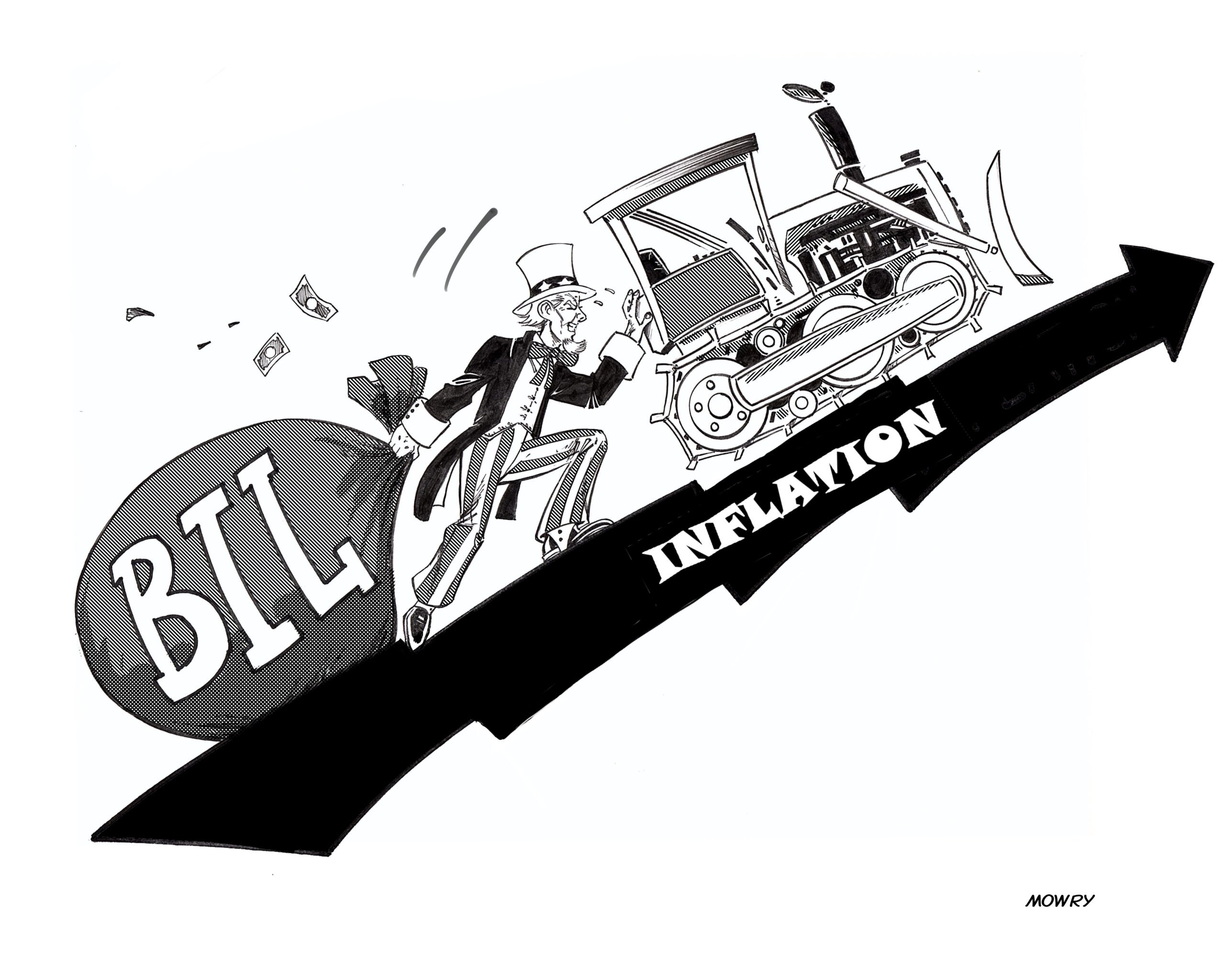
November 2023
The IIJA Turns Two
October 2023
Whose Discretion? GAO Rules MPDG Grants Open to Congressional Review