The US landscape is evolving for toll roads and managed lanes which are organized as public-private partnerships (P3s).
At the federal level, the Credit Programs Office at USDOT’s Build America Bureau (BAB) houses the Transportation Infrastructure Finance and Innovation Act (TIFIA) and the Railroad Rehabilitation and Improvement Financing (RRIF) credit programs. Duane Callender, Credit Programs Office Director, leads a staff responsible for all aspects of underwriting, portfolio monitoring and risk management. Callender oversees a portfolio that encompasses over $31 billion in Federal credit assistance to intermodal, highway, transit, rail, TOD and airport projects totaling more than US$100 billion of infrastructure investment.
Callender, and BAB, are focused on TIFIA’s role in supporting the toll road and managed lane sector. Callender emphasized how the BAB is responding to this fast-evolving sector in order to meet the needs of TIFIA applicants. BAB’s application and due diligence procedures are adjusted and revised as the projects it finances change and evolve.

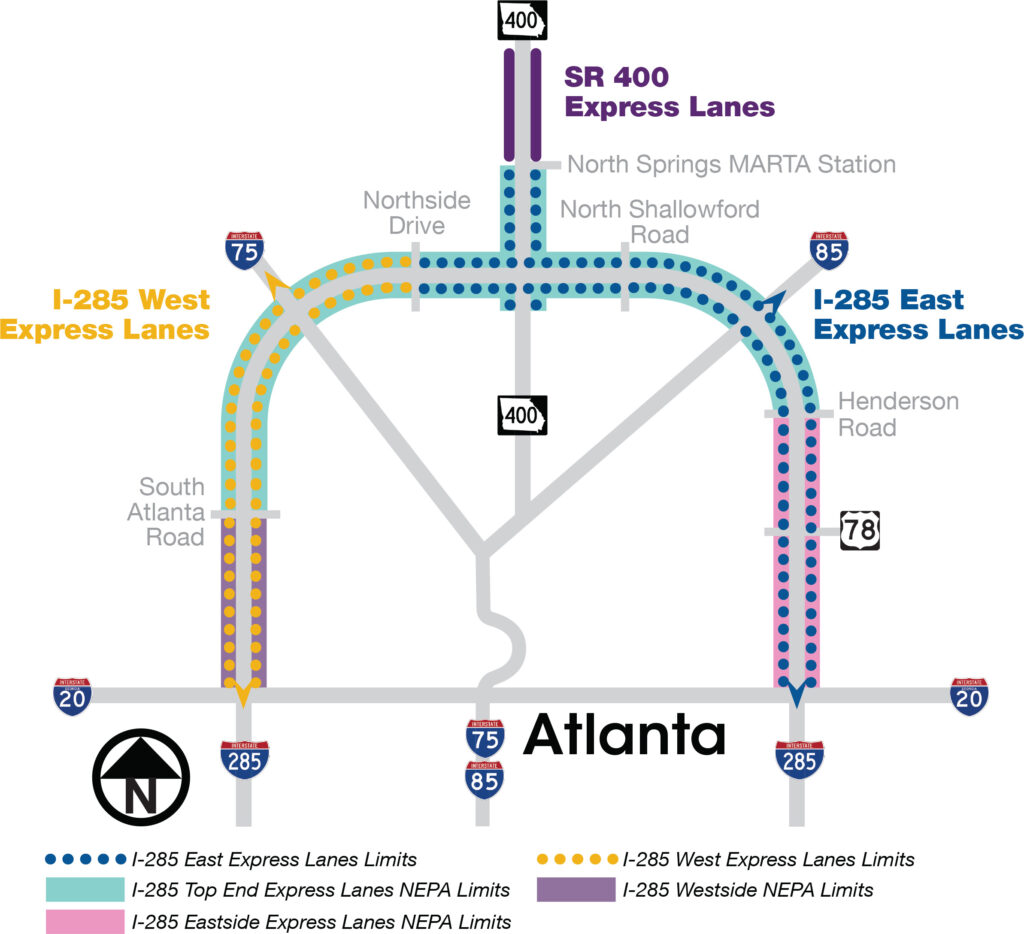
The State of the U.S. Express Lanes P3 Sector
According to a few BAB insiders (and also to a few former BAB staffers), some key shifts are now underway, each of which are worthy of greater attention:
1 Managed lanes are maturing
Managed lanes are no longer niche or experimental. The US market has seen strong performance across many operational managed lanes projects, with revenue consistently outperforming even aggressive projections, demonstrating user acceptance, traffic durability, and long-term financial viability. These assets are now seen as dependable infrastructure investments—validated by positive credit ratings, secondary market refinancings, and growing investor interest.
2 Delivery is evolving from projects to programs
A growing number of the 50 State government DOTs are shifting from isolated one-off projects to comprehensive system-wide programs. This strategic shift allows for more integrated planning, and the ability to cross-support segments to create regional congestion relief and improve mobility. For developers and investors, the ability to plan for a pipeline of projects strengthens long-term business cases.
3 Risk allocation is becoming more nuanced and collaborative
The past few years have seen a market recalibration regarding how risk is allocated, especially construction and performance-related risks. There is a growing importance to balanced risk-sharing, including:
– Inflation protections during long construction periods, particularly in today’s high-cost environment;
– Environmental permitting and utility relocation coordination, which can significantly impact delivery timelines;
– Guaranteed access to rights-of-way before notice to proceed, helping reduce schedule risk;
– Realistic expectations around traffic management and lane closures on active corridors, which effect both construction efficiency and user experience.
One current reality is the importance of operational flexibility to ensure toll facilities can maintain performance metrics, such as minimum speed thresholds and travel-time guarantees.
4 Tolling technology and customer experience are now central to success
Modern managed lanes are built around variable tolling, seamless digital payments, and real-time traffic management. Where early skepticism from the lending market once saw variable tolling as a risk, it’s now embraced as a strength, allowing operators to maintain minimum speed guarantees, optimize capacity, and provide tangible value to users. Owners and developers are embracing flexible payment platforms (apps, license plate billing, etc.) to meet the public where they are. Projects are evolving beyond infrastructure and into customer-centric mobility services.
5 Data is transforming forecasting, design, and operations
A major inflection point for the managed lane asset class has been the significant increase in empirical, observed user behavior data from operational facilities. Unlike the early days, when revenue forecasts relied heavily on assumptions about rational commuter behavior and time-value tradeoffs, today’s forecasting is increasingly rooted in real-world practice and experience. Surprisingly, data shows high willingness to pay even at off-peak hours (e.g., 2:00 am), with users valuing reliability and convenience over just time savings. Real-world insights such as these are better shaping project design, pricing regimes, and long-term revenue modeling.
6 The forecasting model itself is being reimagined
There seems to be a shift underway from static peak-hour-based modelling to more dynamic, empirically driven approaches. Lenders and rating agencies are becoming more comfortable with these improved forecasting methods, especially when supported by robust comparative data from similar assets.
7 Public support hinges on early messaging and transparency
Community and political opposition remains a real issue, especially where tolling is poorly explained or introduced late. Successful states have learned from past missteps and are now embracing early outreach, transparent pricing expectations, and branding strategies (e.g., Tennessee’s “choice lanes”). The success of localized discount programs, clear explanations of “user-pays” principles, and ongoing community engagement as essential tools in building durable public trust.
8 TIFIA and PABs are still foundational
Despite a more diversified funding environment, both TIFIA loans and Private Activity Bonds (PABs) remain essential to the sector. Multiple projects have successfully refinanced out of TIFIA, demonstrating asset maturity and private market confidence. However, experts have flagged the fact that the $30B PABs cap is nearly exhausted, and advocated for raising the cap in the next Federal government budget reauthorization.
9 Technology uncertainty must be addressed with flexible contracts
Autonomous vehicles (AVs), AI-based tolling, and vehicle-to-infrastructure (also known as V2I) technologies are no longer distant possibilities—they’re entering real-world operations. Several prominent experts have noted that AI is already being used in real-time toll rate optimization. However, the long-term implications of emerging technologies on usage patterns, pricing strategies, revenues, and user value remain unclear. Experts are now urging long-term P3 contracts to build in optionality and innovation pathways, allowing public agencies and developers/operators to adapt together as technology evolves.
10 Capacity constraints are real, but surmountable
As project pipelines grow (with $20 Billion in the pipeline) questions of market capacity are becoming more relevant. There are several potential challenges:
– A limited pool of qualified developers and contractors;
– Competition from other global infrastructure projects;
– Strain on engineering and skilled labor resources;
– Pressure on public-sector bandwidth for procurement and oversight.
Most industry experts agree that financial markets (including PABs, bank debt, and private placements/44A markets) can handle the volume, but strong programs with steady pipelines, early market engagement, and dependable procurement schedules are all ways that states can manage capacity risk.
Managed lanes are coming of age. Some experts think that we may now be at a turning point for managed lanes and toll road P3s in the US. These projects are no longer viewed simply as infrastructure; they are mobility platforms—and increasingly, technology platforms—designed to provide a differentiated, customer-focused travel options.
Going forward, success will require more than just concrete and capital. It demands thoughtful program structuring, public outreach and communication, proactive political messaging, adaptive contract terms, and a strong focus on the users. Technology will only hasten this evolution. Getting there will take political will, public support, capacity, and sustained partnership. The tools are here, the track record is building, and, with the right public-private collaboration, the next decade could see managed lanes not only scale up, but help redefine how we plan, finance, and deliver mobility in the US.

TIFIA’s Evolution Under the Trump Administration
The TIFIA program, as established in 1998, offers low interest, long term federal credit assistance (loans, loan guarantees, standby lines of credit) for large surface transportation projects of national or regional significance. Under the Trump administration, and within the framing of the infrastructure policy proposals advanced by the current White House, TIFIA has been both a focal point for expansion and reform.
In 2018 the White House released a new document entitled “Legislative Outline for Rebuilding Infrastructure in America”. In this document the administration proposed to expand existing financing programs such as TIFIA, increase their budget authority, and broaden project‐eligibility to airports, ports, and non federal waterways.
Additionally, the Trump infrastructure blueprint emphasized incentives for states/localities to raise new revenue (e.g., user fees) and greater use of public private partnerships (P3s) alongside credit assistance such as TIFIA. In that sense, TIFIA was positioned as a key financing tool within the broader infrastructure agenda.
In more recent years, we have seen concrete policy changes to TIFIA implementation. On July 7, 2025, the Secretary of Transportation announced that the longstanding DOT policy limiting most TIFIA loans to 33 percent of eligible project costs would be lifted: going forward all eligible projects may access up to 49 percent of eligible costs (which is the statutory cap) under TIFIA. This reform is significant because it lowers a financing barrier for sponsors of large infrastructure projects and aligns practice with the law. Furthermore, in 2024 a final USDOT rule amended TIFIA program regulations (effective June 24, 2024) to ease eligibility requirements; for example, TIFIA projects no longer must be included in or consistent with a state’s long‐range transportation plan.
These current activities reflect a marked shift toward making the credit side of federal infrastructure support more accessible and flexible. The rationale is that by reducing bottlenecks in financing and project eligibility, states, local entities and private partners can mobilize infrastructure development faster, with federal credit assistance filling larger portions of project cost.
Yet, there remain planned and prospective reforms under the administration’s infrastructure vision. Among these: further expansion of TIFIA’s eligibility to new sectors (ports, airports, waterways), continued streamlining of the application and review process, and expanding use of P3s and private investment alongside TIFIA credit leverage. Earlier proposals from the Trump administration had explicitly called for broadening TIFIA eligibility to non federal port infrastructure enhancement and stand alone equipment (e.g., mobile harbor cranes) tied to port/airport facilities. Also, the infrastructure blueprint proposed increasing budget authority (though not always new funding) for TIFIA/other credit assistance programs.
However, one should note caveats and open questions. Although eligibility and loan ceiling reforms are in place, the annual budget authority for TIFIA is subject to congressional appropriations; increasing the ceiling does not automatically raise program funding. Additionally, while the policy changes facilitate access, the actual growth in project use and the pace of approvals remain to be fully evaluated. According to reports, the Build America Bureau has emphasized monitoring key performance indicators (KPIs) under the “TIFIA 49” initiative for transit and transit oriented development (TOD) projects. In essence, the “plan” phase still calls for evaluation of outcomes and possible further refinements.
In summary, under the Trump administration’s infrastructure agenda, TIFIA has been elevated through both policy reform (raising the allowable share to 49 percent, easing eligibility) and strategic positioning (expanding program eligibility, stimulating P3s). These actions reflect a shift from purely grant based funding toward more credit‐assisted, leverage‐based federal infrastructure support. The planned further expansions suggest that TIFIA will remain a central financing tool for large U.S. transportation infrastructure projects going forward, albeit its effectiveness will depend on Congress’s budget decisions and the speed with which project sponsors leverage the revised rules.