Los Angeles is a city of extremes, in infrastructure and everything else. With the Olympics and World Cup approaching, the city has passed unprecedented levels of transportation funding and is home to some of America’s pioneering megaproject public-private partnerships, including two at LAX. It is also an extraordinarily challenging development environment, for infrastructure and everything else.
To catch up on all of the above, this month Public Works Financing spoke with Nossaman’s Brandon Davis. Brandon worked on the concessions for both groundbreaking airport P3s at LAX: the Consolidated Rental Car Facility (CONRAC) and the airport’s Automated People Mover (APM) project. He has also advised on a number of other public-private partnerships and other megaprojects in California, Florida, Arizona, Illinois and elsewhere.
Our topics of discussion include the current state of LA infrastructure and recommendations for future U.S. airport P3s. And given Brandon’s experience developing state P3 enabling legislation, we spoke about the prospects for new highway enabling legislation for California.
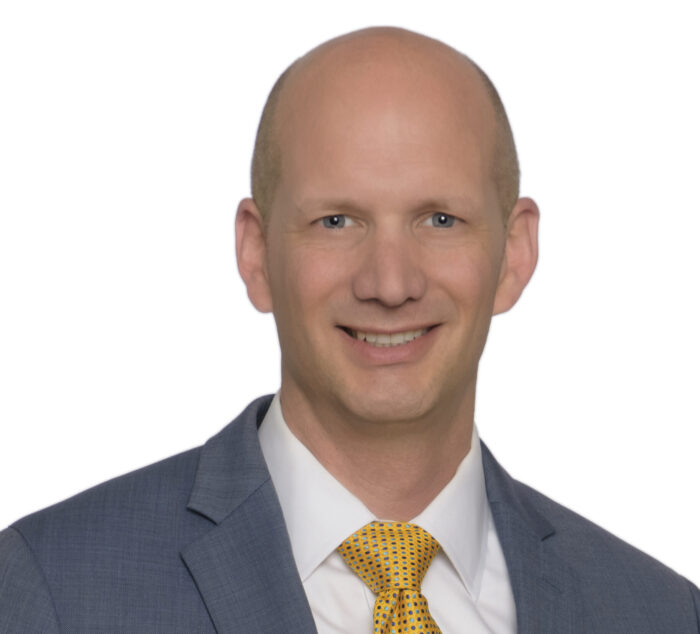
Brandon Davis
PWF: From Measure M/R, to Metro’s alternative procurements, to the Convention Center and the World Cup/Olympics prep, Los Angeles has been an innovator in infrastructure spending and procurement, but the region still faces a lot of development challenges. What are your lessons learned for the region over the last few years?
BD: I’ve lived in LA long enough to know that this city can do big things, and do them successfully. People love it here and Angelenos are proud of their city. When something needs to get done they want to be part of the solution too – just look at Measure M and R. Those were completely unprecedented local transportation funding measures. They happened in LA because the people of LA wanted better transportation infrastructure and did something about it.
If I could pick one lesson from the big projects I’ve been involved in in LA, it is the importance of leadership – and by that I mean political leadership – in getting things done. LA is a big, diverse city with lots of people and local governments or stakeholders. That makes it even more important for elected leaders to step up and directly coordinate their big projects. When they do, LA can do big things.
PWF: You worked on the LAX APM concession agreement and the CONRAC project. CONRAC is now in operations and the APM is nearly complete, though it has a long testing schedule ahead and has been delayed a few times. What are your biggest lessons learned for future airport concession procurements?
BD: When the City procured the APM and CONRAC projects, they were the biggest airport P3s in the nation. One thing that I think sponsors should think carefully about in the early planning of these massive airport projects is the scale of the concession and the interconnectivity with other projects or stakeholders. Everything at one of these massive airports is interconnected. Even the CONRAC project, which is completely operational, is still waiting for its eventual interconnection to the rest of the airport via the APM. How much to include in the concession and the appropriate scale for a single project is a practical consideration in these deals. How big is too big?
I think the City actually struck a very good balance in the APM and the CONRAC projects. The APM project has faced some delays, but it is also a 2.5-mile linear project through an extremely congested and built-out urban corridor. [Los Angeles World Airports] planned ahead and got the MOUs with all of the agencies and stakeholders involved. Today the P3 market has evolved quite a bit when it comes to negotiating both fixed-price and progressive price contracts at that scale.
PWF: Are there any specific clauses or concession terms that you recommend sponsors focus on given your experience?
BD: One area that I think more public sponsors should, and frankly are, thinking hard about very early on is the best mechanism for dispute resolution. I don’t think this is something unique to airport P3s. There is always some alignment and some misalignment between sponsors and concessionaires here. Public sponsors want to protect the public interest and concessionaires are incentivized to consider their long-term claims, but both want a fair process and, most importantly, timely dispute resolution. DRBs (Dispute Resolution Boards) get most of the way there but sponsors have also chosen the Project Neutral approach to speed things up. At the end of the day, however, no form of alternative dispute resolution can keep a project out of litigation when an issue or claim is big enough and the gap between the parties is wide enough.
I also think that buy-in from sister agencies is absolutely crucial from the outset. LAWA planned ahead for this with the APM and CONRAC projects and got all of the agencies onboard early. It is critical to plan ahead and get your ducks in a row for projects like this.
PWF: I noticed that one of the issues that has come up for the LAX APM project is that the concession agreement includes specific timelines that agencies will take to review project plans or design changes. Plan reviewers obviously won’t like being on a deadline, but is there any other way around this issue that reduces third party risk for the contractor?
BD: In every procurement I’ve ever done, every bidder has asked for clarity on how fast the agencies will turn submittals around. That said, I think certainty on review timelines may be more important than speed, so there is generally a way to balance the needs of bidders with a realistic timeline for reviews.
PWF: You’ve also done a lot of work on state level enabling legislation for P3s or other forms of alternative procurement. What are some of the P3 programs, clauses or institutions that you wish more states were incorporating in their enabling legislation from the outset?
BD: There is no magic bullet. And legislation is important, but it isn’t everything. Sectors and regions in the United States have tended to be pretty cyclical when it comes to adopting this or that type of transportation P3 delivery method. One broad recommendation that I have for states is to remember that P3s are a different type of delivery method, so enabling legislation should create processes and rules that are suited for P3s. Too often I think enabling legislation is burdened a bit because it is made to fit in within existing procurement structures, regulations and limitations, when there are different way of doing business under P3s that need to be accommodated.
PWF: California technically no longer has enabling legislation for highway P3s. If the state does end up considering new enabling legislation, would you have any changes that you’d recommend from the old legislation that expired back in 2017?
BD: When it comes back I hope it comes back with a fresh start. California’s old enabling legislation was hotly negotiated on a really tight schedule. Compromises are to be expected, and it wasn’t bad! A bill is better than no bill, and that one got us the Presidio Parkway project. In contrast, when I worked on the P3 legislation in Arizona, we drafted what we thought was an ideal start, and it certainly got tweaked in negotiations, but the legislature didn’t try to force the P3 law to perfectly align with all of its other existing procurement and development processes either. I think it worked well.
I’d love to see highway enabling legislation back in California. I think it will eventually get there. I also think it would be fine to make it another pilot program or event to include a limited number of projects in the bill – not every project should be a P3 of course.
PWF: Do you think LA will be able to build fast enough to prepare for the 2028 summer Olympics in time?
BD: I think you’ll be surprised at how well the city prepares for its big events this summer and of course for the 2028 Olympics. Don’t forget – I’m old enough to remember the ‘84 Olympics as well. They went great then and I think it’s going to be great in 2028.
Related Articles
January 2026
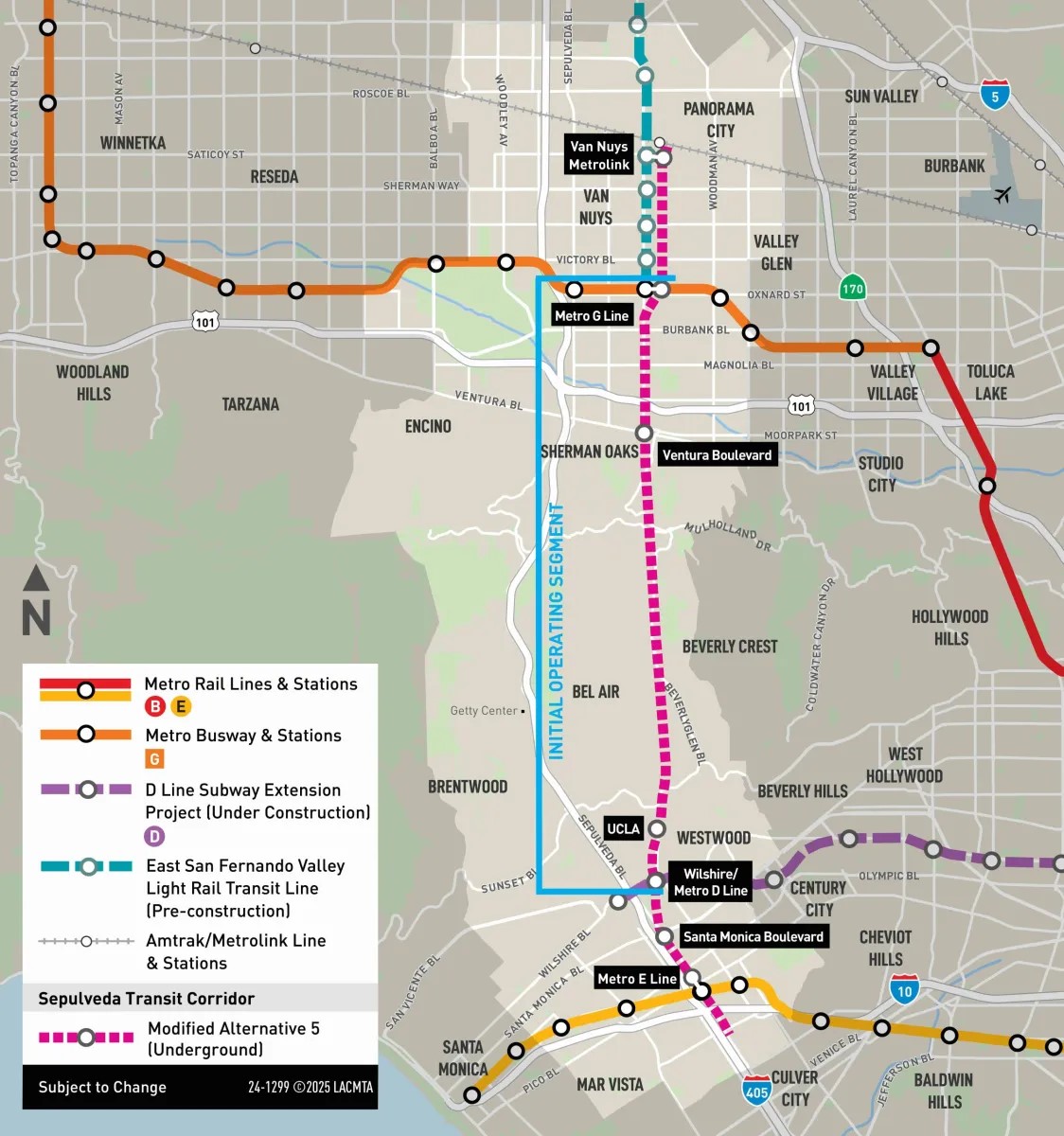
Metro Chooses Tunnel for Sepulveda Transit Corridor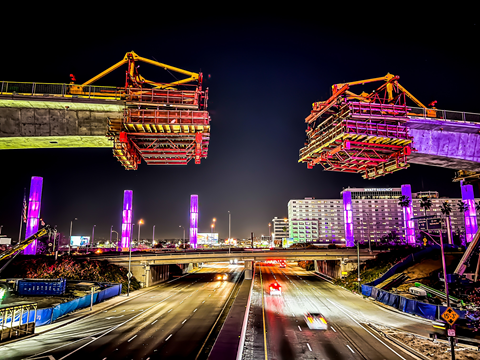
November 2025
Amid New Delay Dispute, LAX APM Project Files Formal Claim
May 2025
Sepulveda Transit Corridor Releases Details on Alternatives, Draft EIR
April 2025
Inglewood Transit Connector Inks Predevelopment, Now Bus Lane Project
January 2025
The Quiet Cancellation of the Inglewood Transit Connector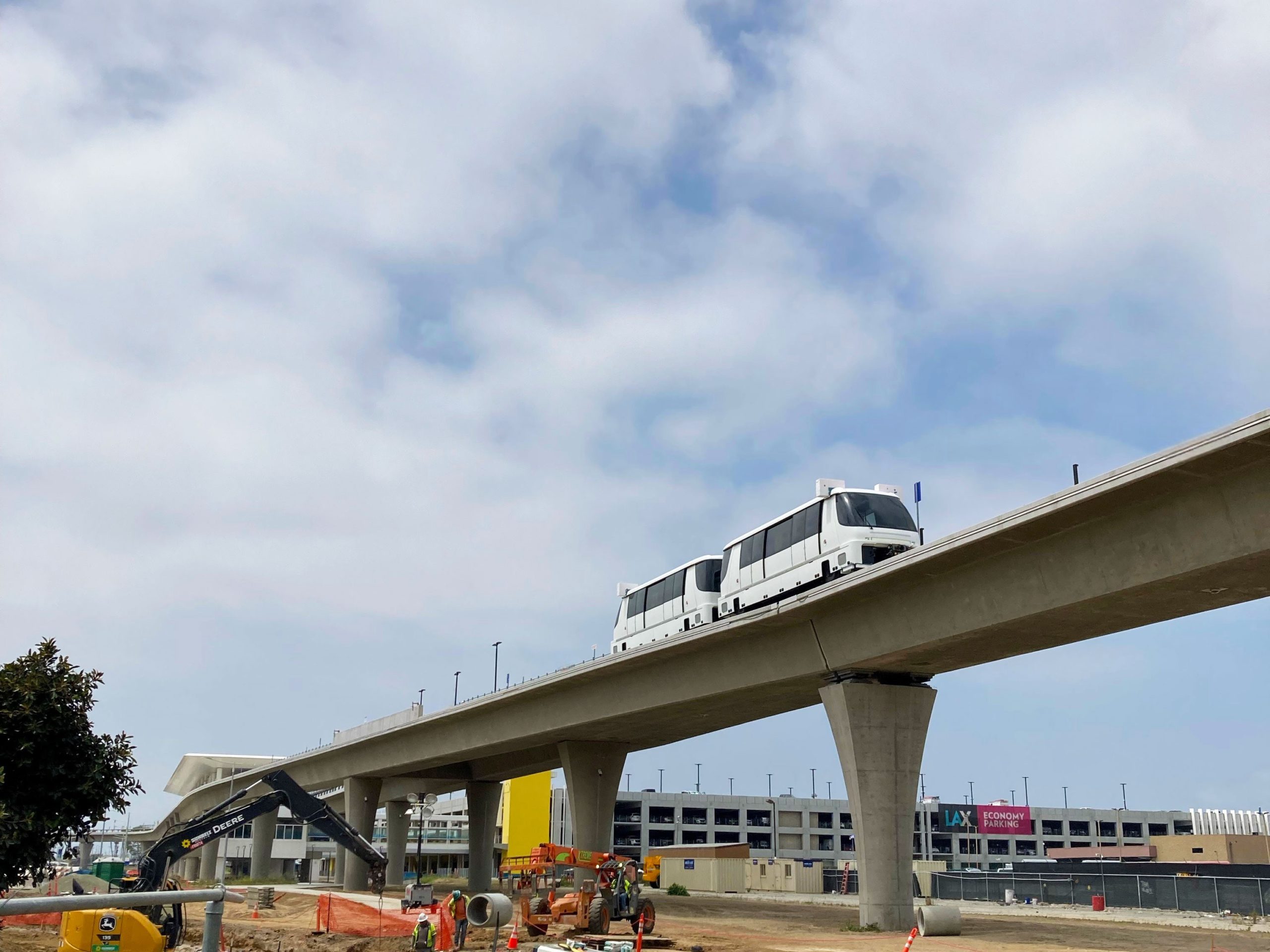
November 2024
LAX Automated People Mover: Testing Moves to Central Terminal