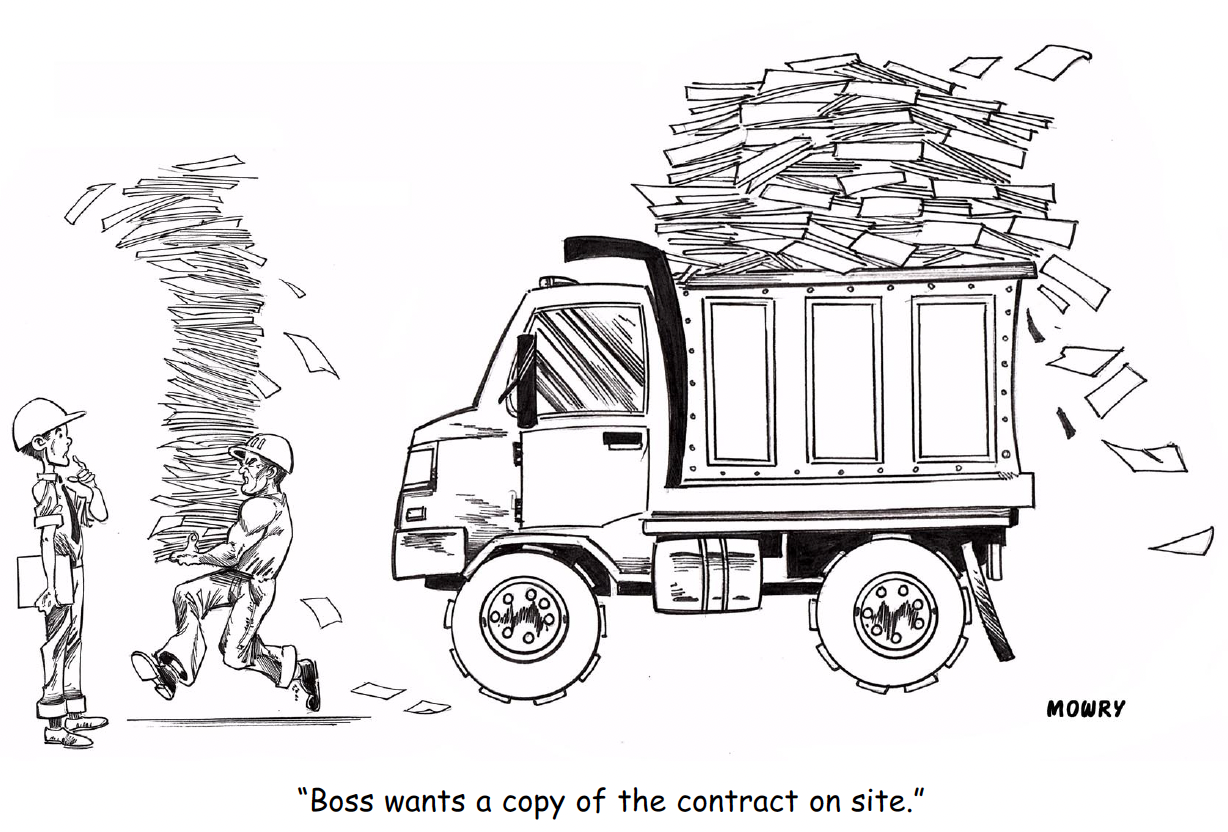
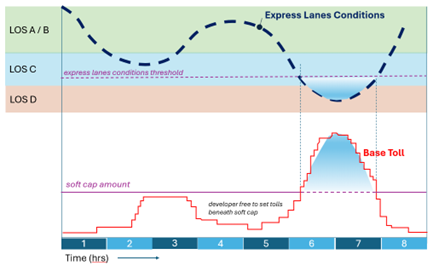
Priced managed lanes (PMLs) are increasingly delivered through public-private partnerships, and the commercial, planning, and long-term decisions needed to deliver them well are the subject of this three-part series. Our first paper examined the commercial decisions at the heart of every PML P3: toll policy, discount structures, and toll services agreements. We argued that good commercial policy balances consumer protection, operational integrity, and revenue generation, and that striking that balance requires the procuring agency (Owner) to make a series of early, value-driven decisions. While these commercial choices are consequential, they can, in principle, be revisited. However difficult to change, toll policies can be renegotiated, HOV policies can be adjusted, and the commercial agreement itself remains open to amendment.
Planning decisions are less forgiving. They are usually tied to the physical world and require extensive, early sign-off by third parties, creating commitments that are difficult to unwind. By the time a procurement begins, the corridor’s environmental clearance is (or should be) largely in place, right-of-way (ROW) acquisition is underway, and the reference design has established the physical envelope and initial cost basis from which the private sector must work. Each of these decisions will constrain the private partner’s ability to offer innovative solutions and identify opportunities to create value for themselves and the public.
The central challenge is that traditional planning methodologies tend toward firm resolution, while P3 procurement derives much of its value from open questions. A successful procurement brings the private sector’s expertise, creativity, and capital to bear on issues that haven’t been fully resolved yet.
Regional traffic and level-of-service models, capital and operating cost estimates, and environmental impact assessments have been developed by planners over decades of practice and are necessary to pass regulatory and stakeholder scrutiny. These processes were built for traditionally delivered projects, where they were designed to answer questions, fix alignments, establish parameters, and build consensus around a defined solution that would be delivered with few to no substantial changes.
The tension between these two orientations is where P3 planning decisions become strategically consequential. Every time an agency settles an element of the project plan, it is implicitly making a choice about whether the private sector will have room to find a better answer.
Sometimes that choice is transformative. The LBJ Express Lanes in Dallas were procured with a mandate of ‘no higher and no wider’, a constraint that significantly limited the technical solutions available to developers, but one that reflected real political commitments and community expectations that could not be traded away. The mandate ultimately served as a catalyst: the winning consortium developed a signature cantilever design that saved billions against the tunnel reference design.
In this article, we encourage public agencies to consider precisely what they are saying no to, and why. The best planning decisions, like the best commercial ones, are anchored in an owner’s most strongly held values and priorities, while intentionally preserving flexibility everywhere else.
This article examines three planning decisions where that tradeoff is most consequential: design flexibility, commercial vehicle (trucks) policy, and operations and maintenance responsibility. Each decision is difficult to reverse once procurement begins, and each represents a place where an owner’s early choices (deliberate or not) will shape what the private sector can offer and ultimately what the project can become.
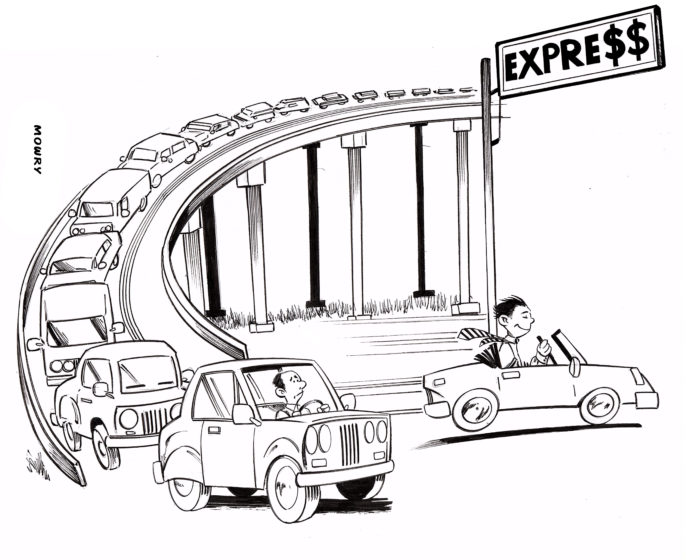
Planning Decision #1: Corridor Design Flexibility
One of the most distinctive features of a P3 procurement is the opportunity for private sector developers to bring a fresh perspective on what should be built. Unlike traditional delivery, where design is largely fixed before the developer enters the room, a well-structured P3 provides real latitude for developers to propose changes. For a PML, this most commonly includes additional access and egress points, realigned overhead structures, and different toll segment configurations that the owner may never have considered or previously dismissed.
Developers surface their innovative ideas through the Alternative Technical Concept process, in which they submit qualifying changes for owner review against a straightforward standard: the proposed solution must be equal to or better than the reference design or applicable design standard. In practice, the ATC process is where much of the real value of a P3 is either unlocked or set aside after careful consideration.
Realizing that value requires owners to think carefully on two fronts. The first hinges on the regulatory envelope drawn around a project. Before a formal procurement can begin, an Owner must secure environmental clearance and flag potential ROW acquisition. Thoughtful owners approach early planning work in NEPA and ROW to support a reasonable range of solutions and configurations, neither so narrow that it forecloses innovation nor so broad that it derails the planning process. Owners who are unsure if they are striking the right balance can engage with experienced agencies or the private sector early through market soundings.
Owners themselves are often the second constraint. PML developers bring significant national and international experience, operational data, and a holistic view of how connectivity, customer experience, and behavioral economics intersect. When given room to apply that expertise, they often find solutions that lower capital costs, simplify operations, and meaningfully improve value for drivers and themselves.
Cultivating genuinely useful ATCs from first submission through to a viable solution requires a cooperative spirit, and owners are sometimes reluctant to extend real latitude to developers to propose novel solutions. An owner who has made firm public commitments about every element of the project, accepts no risk on uncleared concepts, and expects the delivered design to mirror the reference in every meaningful respect will receive incremental innovation at best. The ATC process rewards owners who have deliberately left headroom for improvement and who are willing to be a real partner to the private sector.
Georgia DOT’s approach to evaluating ATCs on SR 400 represents one of the most creative owner-side innovations in recent P3 procurement and illustrates what that kind of commitment looks like in practice. Recognizing that some of the most valuable ATC concepts might require environmental clearances not yet in place, GDOT established its own robust preliminary review process to assess the likelihood of federal acceptance and agreed to take risk alongside developers on the economic downside if the ATC was ultimately rejected (in full or partially). That commitment transformed the procurement into one in which developers competed on the quality and ambition of their proposed solutions, not just price. GDOT’s risk exposure and involved review of ATCs also provided comfort to rating agencies and lenders who may often view high-value changes as risky and take more conversative downside views as a result.
Owners need not replicate GDOT’s model exactly to be successful, but the underlying principle applies broadly. In our experience, the best ATC submissions come from developers who believe the owner will seriously engage with novel ideas and share in the cost of real risk. Transparency about constraints, including firm stakeholder commitments, safety requirements, and environmental boundaries, helps developers focus their efforts where they can produce results and builds the kind of trust that brings out the best the private sector has to offer.
Planning Decision #2: Commercial Vehicles
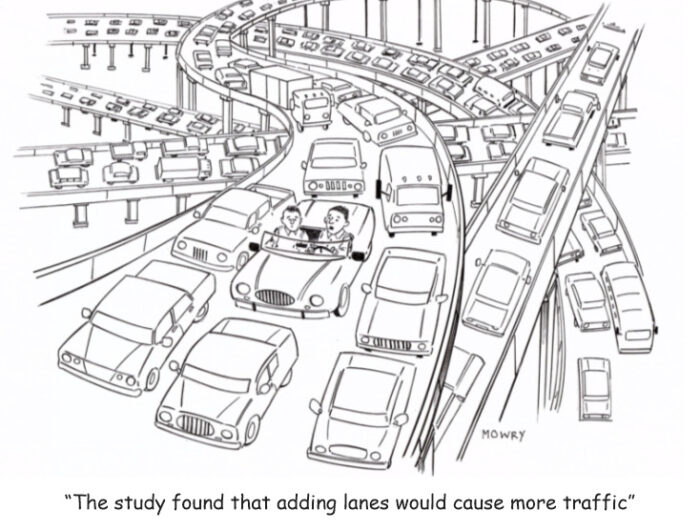
Few planning decisions attract stronger opinions than whether to allow commercial vehicles (trucks) on PMLs and, if so, what restrictions on size or utilization should apply.
It is worth being precise about what we mean by “commercial vehicles” and “trucks” in this context, as the discussion rarely includes the full range of commercial vehicles. Most operating express lanes permit autos, transit buses, and small trucks (typically two-axle, single-body vehicles up to FHWA Class 5). During a P3 procurement, decisions to permit multi-axle, single-unit medium trucks (FHWA Classes 6-7) and multi-axle, trailer-carrying large trucks (FHWA Classes 8-10) raise a distinct set of questions and tradeoffs. As of this writing, only one PML permits multi-trailer vehicles (FHWA Classes 11–13). In practice, it is the large truck question that defines the commercial vehicle debate in most P3 procurements: should 18-wheelers be allowed on the PMLs?
Proponents of allowing trucks emphasize the substantial revenue potential, improved freight mobility, and congestion relief on the General Purpose Lanes. Opponents raise safety concerns, increased infrastructure costs, and the perception that trucks will upset the fast, reliable experience that auto drivers expect.
In our experience working through this question with owners and the private sector, that framing overstates the tradeoffs. The national record from operating PMLs with and without trucks tells a more nuanced story, where the consequences of allowing commercial vehicles depend on corridor characteristics, separation type, pricing structure, and operational design.
Operating experience across PML corridors that permit trucks offers useful guidance. Some facilities restrict access to smaller commercial vehicles, while others, including the DFW TEXpress Lanes and I-66 Outside the Beltway, permit large commercial trucks. Where trucks are permitted, they tend to use the PML and general purpose lanes in roughly equal proportion, suggesting they are neither drawn to nor discouraged from the PML relative to their share of overall corridor traffic. The DFW context made the early case for truck access relatively intuitive, as the chosen corridors serve major freight infrastructure including an active NAFTA corridor, a large intermodal facility, and significant cross-metro goods movement. However, the experience that followed has been instructive beyond that specific context.
On safety, the picture is encouraging but worth interpreting carefully. Studied PML corridors consistently show substantially lower crash rates than comparable regional highways, with or without allowing large trucks on the PML. Disentangling the contribution of truck access specifically from other factors like newer and better maintained infrastructure, improved geometry, and the influence of pricing is difficult without a controlled comparison that the available data does not yet cleanly provide. What the evidence does not show, however, is any clear pattern suggesting that truck access materially degrades safety outcomes. That finding, provisional as it is, has been consequential. Corridors that previously restricted larger vehicles have begun moving in a more permissive direction: the I-77 Express Lanes in Charlotte extended access to medium trucks in 2023, and the I-495 Express Lanes in Virginia recently updated their vehicle classification policy to accommodate large two-axle trucks after years of limiting access to only smaller, two-axle vehicles. The direction of change in the last few years, informed by accumulated operating experience, has moved toward being more inclusive of trucks, not less.
Traffic data from PMLs and traditional corridors alike consistently shows that trucks typically comprise 7-15% of total volume on a major urban freeway. Truck volumes are highest during midday, while autos dominate peak hours. This natural separation of demand means that truck presence rarely conflicts with the peak-period reliability that auto drivers value most. Where concerns remain, higher pricing multipliers applied to trucks during rush hours can help manage the demand. This practice is becoming more common on PMLs: the SR-400 Express Lanes in Atlanta, I-77 Express in Charlotte and I-66 Express Outside the Beltway in Northern Virginia each permit different classes of truck while allowing operators to apply higher toll multipliers during peak periods. This truck-pricing flexibility is intended to prioritize a fast and reliable experience for autos, allowing operators to ‘price out’ trucks during the busiest rush hours, if the operational need arises.
The geometric and engineering implications deserve equal attention and are often underweighted in early planning discussions. Early PML designs are frequently cost-conscious, featuring narrower lanes, reduced shoulder widths, thinner pavement optimized for autos, and ROW-minimizing ramp configurations. As elaborated in our introduction, these planning decisions are typically made to pass the financial and environmental scrutiny that projects face early. Since accommodating larger trucks typically requires revisiting some or all of these parameters, the resulting need to reconsider ROW or environmental clearance can slow or stall a procurement.
These are not insurmountable challenges, but they are far easier to address early. The question of truck access is not a tradeoff that should be made in the abstract. Owners should instead consider whether the corridor’s physical characteristics, the owner’s pricing flexibility, and the project’s political context create conditions under which the substantial revenue potential offered by allowing trucks can be realized. Because that revenue potential is often the central consideration in practice, particularly for larger, higher-cost projects that must support significant capital needs, a thoughtful owner will preserve the option to include trucks while making its early planning decisions.
Planning Decision #3: Operations and Maintenance
Compared to the other planning decisions discussed in this article, the allocation of O&M responsibility between the owner and private operator is the least visible to the public and rarely generates headlines, but its consequences are felt daily, for the life of the concession. The central question is whether the developer should be responsible for maintaining only the PMLs or be given partial or total responsibility to maintain the general purpose lanes (GPL). If O&M responsibility is allocated poorly, it serves as a persistent source of friction between the public and private partner. If done well, the O&M obligations disappear into the background, where they belong.
An owner’s first instinct is often to retain O&M responsibility for the GPL, leaving the developer to maintain the PML. This appears to draw a clear line, limiting private sector involvement to the revenue-generating asset and preserving the owner’s control over driver experience on the rest of the corridor. In practice, that line is much harder to maintain than it appears. PMLs are most successful on busy, congested corridors where incidents occur daily. First responders and maintenance crews move constantly across the full width of the road and the physical and digital infrastructure of the PMLs and GPLs is deeply intertwined. A PML-only scope means that every time the owner responds to an accident in the GPLs, clears snow, or dispatches a maintenance crew, there is a potential interface with the developer’s operations. Over the life of a decades-long concession, and even with carefully developed coordination and interface provisions, those interactions accumulate and may become, in the worst cases, a recurring source of conflict.
Medium- and longer-term issues compound this dynamic. Developer access to variable message signs and ITS equipment located outside the PML footprint may require ROW access permissions that slow incident response. Repairs or upgrades to shared infrastructure, like bridges, drainage systems, retaining walls, require coordinated work windows that neither party may fully control. These issues are manageable with the right contractual frameworks, but each represents an ongoing administrative burden.
Allocating fence-to-fence responsibility to the developer addresses most of these challenges directly. Operators often welcome the economies of scale, and the owner benefits from dealing with a single party responsible for the performance of the entire facility.
Yet the allocation of O&M responsibility need not a binary choice. Hybrid approaches have been developed in some cases. Notably, the I-77 Express project allocates day-to-day O&M to the developer across the entire corridor, while longer-term renewal and major maintenance obligations remain with the DOT. This allows the DOT to capture many of the benefits of across-corridor operations without fully surrendering control of major construction decisions and expenditures. DOT can also terminate the GPL O&M work with the developer without terminating the broader concession agreement, allowing them to bring that work back in-house if needed.
One reasonable concern is that a developer motivated by toll revenue will over-invest in the PMLs at the expense of the GPLs. In our experience, this risk is overweighted and it reflects a misunderstanding of what a well-structured O&M policy should accomplish. The goal is not to cap the developer’s investment in the PMLs, rather, it is to ensure that the general infrastructure be maintained to a clear and reasonable standard, which is accomplished through corridor-wide performance requirements.
Setting fence-to-fence performance requirements so they are specific enough to be enforceable, yet flexible enough not to be unnecessarily prescriptive, requires careful upfront work and close collaboration between the owner’s engineering, operations, and legal teams. That internal coordination is a real effort, but one spent during procurement rather than absorbed continuously across decades of day-to-day operations.
Still, fence-to-fence responsibility is not always the best answer for an owner. In some corridors, the owner may place real value on retaining direct control over the condition and user experience of the GPLs, particularly where those lanes serve the broader traveling public and remain politically sensitive. Keeping some or all GPL maintenance with the DOT can also avoid paying a private-sector management premium for activities the agency may already perform efficiently through its own forces or existing maintenance contracts. In addition, retaining responsibility for major renewal work may better align with the DOT’s broader asset-management program, allowing the agency to coordinate resurfacing, bridge rehabilitation, and other capital maintenance across the wider network rather than treating the corridor in isolation.
Conclusions
The three planning decisions examined in this article share a common characteristic: they are far easier to get right before procurement begins than after. Environmental commitments, ROW scoping and acquisition, and stakeholder expectations harden quickly. Unlike commercial terms, which can in principle be revisited through negotiation and amendment, planning decisions are often one-way doors.
The goal of thoughtful planning is not to resolve every question early, nor is it to leave every option available. Rather, it is to be deliberate about which questions you resolve and which you leave open. Owners who approach these decisions strategically, with a clear sense of their most strongly held priorities and a willingness to preserve flexibility everywhere else, will find that the P3 process rewards that discipline.
The forthcoming third and final paper in this series will examine a challenge that cuts across both commercial and planning decisions: how to future-proof a contract with a 50-plus-year shelf life. The world that greets the end of a concession signed today will look very different from the one in which it was procured. These contracts will need to accommodate, at minimum, connected and autonomous vehicles and new payment systems, along with other technologies not yet imagined. Together, these will shape mobility solutions and behavior and test the assumptions implicit in today’s agreements. Our next and final installment focuses on the mechanisms, ladders, and contractual tools that can fairly align incentives between owners and developers as that world unfolds.
John Brady and Noah Jolley are part of HNTB’s Advisory practice, focused on providing strategic and commercial advice for large transportation initiatives in the United States.